LOVE AND RESPECT FOR ALL HUMANKIND

People say, “You can judge a man by how he treats his inferiors.” I say no! We don’t have inferiors! Some people have more apparent talent or money, better positions, fancier cars, higher functioning brains, or genes that make them appear more attractive, but there is no reason for anyone—and I do mean anyone— to hang on to an illusion of superiority.

There’s a lockstep mentality that passes from generation to generation. Parents teach bigotry, and, to many, their parents can never be wrong. With a subconscious or even conscious fear of not being accepted or not fitting in with their loved ones, these children embrace the ideologies passed on to them and, in doing so, form alliances that continue to reinforce them into adulthood.

In terms of religion, I never want to shut people down for believing or not believing what the various holy books say. I can’t dismiss the cherry-pickers seeking to find a safe middle ground. If a person has genuinely “lost their way,” they can find it again. I’ve met good, kindhearted people of just about every faith, so simply believing and practicing a religion isn’t the problem. People are entitled to their beliefs so long as they’re not committing or otherwise condoning crimes against humanity.

As someone who is fifty percent Latina, I’ve also experienced racism on a minor scale, and it gave me some idea of what it might be like for people who experience hate, discrimination, and oppression on a much larger scale. If you are a member of any group that is oppressed to one degree or another, you are acutely aware of the global and systematic imbalance. As a result, many of us have a pretty good idea of how terrorizing it can be when your rights are denied, or you’re not treated with the respect and dignity you deserve.

For me, opposing bigotry is not about being “politically correct.” Having empathy for others is simply correct. People go to war over bias and entitlement. They discriminate and violently target others based on the same. It becomes a case of “We hate the same faction, so it’s clear who the enemy is.”

It’s not about tolerance, either. There’s a lot of destructive and harmful behavior that I can’t and won’t tolerate. But who am I to merely “tolerate” a person’s ethnicity, sexuality, socioeconomic status, or religious philosophy? Those are things to be welcomed, not tolerated. I don’t want anyone’s rights to be denied any more than I’d want my own rights restricted. There was never a time when that did not feel inhumane to me.

Detractors are fond of saying that people who defend the rights of others who are denied whatever privilege they enjoy have a “savior complex.” When I first heard that, I allowed myself to ponder it for a bit, given that I’ve been speaking out against bigotry since I was twelve. It was instinctive then, and it’s instinctive now because I never wanted to live in a world where bigotry was normal. It never made a difference to me if people on either side were happy or unhappy about my stance.

It always made sense to me that you cannot know a person just because you’re aware of their race, ethnicity, religion, or sexuality. No group is perfect. You need to get to know individuals because we are all different.

For many people, when someone who is not like them hurts them, they postulate that it reflects on that group’s culture. They won’t consider their own people who’ve done the same thing or worse. Without having genuine relationships with the people from whatever culture they shun, their impression is based on limited experience. They go by stereotypes or by what they’ve read in the news or learned from TV.

I’ve experienced unprovoked attacks from people who did not look like me, but I’ve also been attacked by my “own” people, and although my worst experiences of sexual trauma were at the hands of white, Italian Catholic males, I’ve always known that not every white, Catholic Italian guy is that way. That same benefit of the doubt should be extended to people who belong to different groups.

Among the things I’d been taught, what truly stuck with me in life was the whole “love one another” thing. Yes, I really liked that part. Isn’t it a fundamental theme in all religions? No one is perfect, but if we can do better, we should. Life’s hard enough, and it helps if we cheer each other on along the way.
If we must keep influencing our children with our thoughts, let those thoughts be reminders that we are all divine, and divinity surrounds us, and in that way, we have much more power than we realize. We have that power for a reason. We don’t see everything yet, and we don’t know everything, but we are creating the future—the world we want to live in, and the world we will leave our children. We can keep evolving toward a much higher consciousness and create the idyllic world we envision.

I read something recently that said we should treat everyone as sacred until they begin to believe they are. That is the ideal way to live, isn’t it? It might solve many problems in our world, individually and collectively. I’d love to commit myself to that, to remind myself of that always.

So, whoever you are, you are beautiful! You are a divine creation and the very essence of love. Don’t let anyone take that away from you!

“For to be free is not merely to cast off one’s chains, but to live in a way that respects and enhances the freedom of others.” —Nelson Mandela, former President of South Africa, political leader, philanthropist.

“If we accept and acquiesce in the face of discrimination, we accept the responsibility ourselves and allow those responsible to salve their conscience by believing that they have our acceptance and concurrence. We should, therefore, protest openly everything… that smacks of discrimination or slander.” —Mary McLeod Bethune, political activist, organizer, and educator. 

Feature photo at the top by Ehimetalor Akhere Unuabona on Unsplash

“Make People Feel Loved Today” photo by Clay Banks on Unsplash

LOVE AS A WAY OF LIFE

Some people may think unconditional love as a way of life means loving, supporting, befriending, and forgiving everyone in every instance. I see it as a general way to view other humans and a way of having compassion for those who struggle.

It doesn’t mean supporting or necessarily forgiving the behavior of those who intentionally seek to harm others. It doesn’t mean befriending those people.

Unconditional love is a blanket feeling, a way to interact and approach. It’s a way to work at your life’s passions. Overall, it’s a way of being—having an inclusive mindset, offering a welcome space, and relentlessly projecting love. ~D.K.

“People often ask me
what is the most effective technique
for transforming their life.
It is a little embarrassing
that after years and years of research
and experimentation,
I have to say that the best answer is—
just be a little kinder.”
Aldous Huxley

Feature image of heart with dove, earth by Stefan Keller from Pixabay 

SENDING LOVE TO THE PEOPLE OF UKRAINE

“Man is the only animal that deals in that atrocity of atrocities, War. He is the only one that gathers his brethren about him and goes forth in cold blood and calm pulse to exterminate his kind. He is the only animal that for sordid wages will march out…and help to slaughter strangers of his own species who have done him no harm and with whom he has no quarrel. ..And in the intervals between campaigns he washes the blood off his hands and works for ‘the universal brotherhood of man’–with his mouth.” Mark Twain – What Is Man?

Since its first season, I have been a fan of the television show Dancing with the Stars, so I am pretty familiar with Ukrainian-American pro-dancer Maksim Chmerkovskiy, who appeared in many earlier seasons and recently as a judge. When the Russian invasion began, Maksim was a judge on the Ukrainian version of Dancing with the Stars. For days, he took refuge in a bomb shelter, and his frequent Instagram videos revealed how distraught and heartbroken he’s been, barely able to hold it together. At the same time, he kept us informed and advised people of ways to help. As of now, he’s trying to leave Ukraine, making his way to the border, and I pray he arrives home safely to his loved ones.

So many courageous people, including Maksim. are coming to light right now. And we’re seeing an extraordinary display of empathy with people speaking up and reaching out, a great measure of love and support. That moves me to no end, as does the unity among the Ukrainians and overwhelmingly on a global scale.

Someone posted on Twitter that “Ukrainians are not fighting with each other over issues like vaccines and CRT. They are fighting FOR each other so future generations will enjoy the freedoms that exist in a true democracy.”

That’s true. These things I mentioned above—empathy, love, unity, etc.— have been lacking here throughout the elections and pandemic and one crisis after another. So, yeah, I find it hard not to cry when I see good people fighting back against corruption, cruelty, and greed.

Ukraine’s president, Volodymyr Zelenskyy, has stepped up to be quite the courageous leader whose humility allows him to see himself, not as an idol to be worshipped but as a patriot who refuses to abandon his country or his people. It reminds us that humans can be amazing.

Every day I send all of them love, light, and prayers—and to the whole world. Wherever there is suffering, we suffer, too, because we care about each other.

Beautiful Ukraine

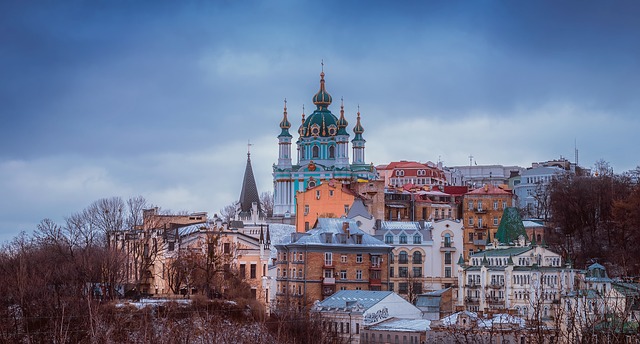
Kiev
Image by David Mark from Pixabay 
Ukraine church
Image by Alexandr Podvalny from Pixabay 
Kiev, Ukraine
Image by Zephyrka from Pixabay 
Ukraine Forest
Image by David Mark from Pixabay 

Ukraine flag heart feature photo (way at the top) by Сергій Марищук from Pixabay 

FORGIVING FOR YOUR HEART, SOUL, AND PEACE OF MIND

harbinger-of-spring-3254539_1280

From the time I was a child, I’d heard that people born under the sign of Scorpio couldn’t forgive others. They held grudges forever, and these diabolical creatures, when wronged, were never satisfied with sticking the knife to their enemy (figuratively speaking, of course). They had to twist it from side to side.

Yikes! I happen to be a Scorpio (as if it matters), and this isn’t a blog about astrology. It’s about what I’ve learned about forgiveness, Pluto be damned. (Yes, Scorpio is ruled by a rock that is no longer considered a planet, so that tells you how much stock you should put into these things.)

Further, believing such a thing about yourself and committing to it is demoralizing, self-sabotaging, and self-destructive— not just for people born in the latter part of October and earlier part of November but for anyone.

The good news is, I was never doomed to be an unforgiving Scorpio or anything else I didn’t want to be, and neither are you! Nobody can tell you who you are, and you alone define your limitations. Our wills are more powerful than our experiences if we want them to be, and it’s a safe bet they’re more powerful than any effect the sun may have had on us at the time of our birth. The whole idea that we can’t help being who or what we are and have no control over it is utter nonsense. We can do whatever the hell we want, and we alone are responsible for what it is we decide to do.

Besides that, if we want to recover from our afflictions and tragedies, we need to heal and learn and grow and continue to evolve until our dying day. For this reason, we must come to understand forgiveness and the vital part it plays in our lives.

Those of us who’ve been in twelve-step programs for one affliction or another have likely come upon literature that explains the whole forgiveness thing better than I can. The Big Book of Alcoholics Anonymous states that, “Resentment destroys more alcoholics than anything else because deep resentment leads to futility and unhappiness and shuts us off from the Sunlight of the Spirit.” Addiction Treatment magazine notes that “Harboring anger can encourage you to be in a constant state of anxiety, which then can cause numerous physical health problems. Too much stress and anxiety can lead to cardiovascular issues, a weakened immune system, high blood pressure, and other potential ailments.”

Now, if you ask me … (You are asking me, right?) Forgiveness involves coming to terms with the truth.

For trauma survivors, like me, that’s not as simple as it sounds. All our lives, survival instincts had kicked in when necessary, leading us to strategize, justify, deny, etc.—whatever we had to do to cope. We may have even learned to deceive others with or without realizing, because we were deluding ourselves. That’s quite the dilemma when coming to terms with the truth is the only way to determine our level of responsibility for what happens in life.

Bear with me now because the first time someone told me I needed to own my part in everything that happened to me, I was royally pissed. If that included some horrific thing I surely didn’t deserve, it seemed downright cruel.

Well, when it comes to trauma survival, the idea of ‘owning our part’ is indeed cringeworthy, but it’s about addressing the issue of what we might do differently going forward. It’s the same question we’d ask in any other life-altering experience that leaves us shaken. The wording is appropriate when applied to the more typical betrayals or arguments—people hurting and rejecting one another in the way imperfect humans do. Either way, if we are the victim of someone else’s bad behavior, self-evaluation doesn’t mean the culprit is absolved of wrongdoing or that he or she is any less vile. It’s not to say that you or anyone else is okay with what happened, or that you are required to understand the reprehensible motivation behind what this person did.

The things that happen to us in life, good or bad, are learning opportunities that can increase our awareness about the world we live in, about others, and ourselves. No one says it’s fair or easy. Children can learn it from loving adults, what to do, what not to do, going forward, understanding that what happened wasn’t their fault. The acquired knowledge does not guarantee anything, I know, but it certainly helps. That’s what we’re owning.

You may have heard it a million times, and it’s still true: forgiveness is, first and foremost, for the one who suffers. It takes place so that whatever or whoever has hurt you no longer owns you or has control over your life. It’s a letting go that allows you to live and breathe and move on, survive and thrive by not allowing the perpetrator to cause you more suffering than you’ve already endured.

Excluding any justice sought in a criminal act, it didn’t take me long to see (even as an evil, menacing Scorpio) that retribution happens to abusive people without any help from me. They are their own worst enemies, and, sooner or later, the piper catches up to collect what he is owed. Some people balk at me when I say this, but I’ve learned to send love whenever these damaged souls come to mind. They surely need it. When I was at my absolute worst, I needed it, too. I still do. In fact, we all do.

However, despite all I’ve said here, nobody can tell you how to handle your feelings.  We can talk about what works for us, with the hope that it might help someone else find the peace and joy that we’ve found, but that’s as far as it goes.

There were many times I’d witnessed a person expressing anger and grief over a traumatic experience, and others got upset about it. The others, in response, would say things like, “Well, I have a friend who went through that, and she had counseling, bla bla bla. She’s fine now, and maybe if so and so did that, he or she wouldn’t have to dwell on it and could move on.”

Well, no, people don’t necessarily react to trauma in the same fashion, so expectations of how people should behave are absurd. As for therapists, there are some who make it worse by revictimizing, or re-traumatizing because they don’t deal effectively with the repercussions of trauma. If you’re lucky enough to find the right counselor, therapy is excruciating work that leaves you raw and vulnerable to your very core. You have to be ready for it and strong enough to see it through.

So, yeah, no one has the right to decide for another person when it’s time to stop being angry, and to forgive and let go. Anger, like every other stage in the grieving process, must run its course.

If a person is never ready to stop being angry or forgive, it’s not for me or anyone else to judge. Healing is an ongoing process that, for all we know, may continue beyond this lifetime.

As I see it, we don’t forgive for the sole purpose of appeasing others.  We do it when we’re prepared to rescue ourselves from the onslaught of continual suffering. And that’s where, in situations that are not so cut and dried as to who did what to whom, coming to terms with the truth helps determine our level of responsibility.

In any case, we cannot allow people to deny our reality of what we experienced or accept their spin on it if it has no basis in truth. We don’t want justification for what cannot be justified or for others to minimize the damage. We may be guilted and shamed into keeping quiet or making concessions, but to do so would impede our progress. Deciphering what is true and what is not is more important than appeasing others who need to deal with their own wounds. Their place in the healing process is different from ours, and we can’t wait there with them. We have work to do.

For us, the secrets and lies must end. It’s a fight for our well-being and our sanity. We’ve already endured the pain of silence. We’ve suffered too much already from the consequences of denial. We went through years of being protectively dishonest. We told ourselves we were okay when we weren’t yet. We said we’d survived while our brokenness continued and thought we were thriving when we were hanging on by the seat of our pants. We can’t afford more delusions about any of it. We have a right to be well and whole again.

It is critical that we stand up for ourselves and find out who we are as opposed to what other people want or believe us to be.  It is crucial that we slowly and continually peel off every layer of the false self we present to the world, that we become more and more honest with ourselves and others.

After that, forgiveness exists at different levels, all of which amount to some form of healing and resolution. Perhaps it is forgiveness for resolving differences, where two people have worked through it, allowing the truth to sort things, and their relationship to resume with a clean slate. Maybe it’s forgiveness for peace, where you don’t have to trust this person again or have what you once had, but you’ve relinquished the hard feelings. And maybe it is purely for self-love and healing, and it doesn’t involve having to deal with that person again.

No matter how it plays out, we’ve taken our power back. It doesn’t mean we won’t be triggered when we see the same thing happening to us or to someone else in the future, especially when those people are silenced or dismissed. But we will be whole again.

All I can say is, if I’d bought into that nonsense of being unable to forgive, I’d be permanently screwed.  It would have kept me from rising in my power and from the ability to summon my courage and my strength whenever I need it.

The hell with that!


Copyright © Kyrian Lyndon January, 2019

Feature photo courtesy of Pixabay