The Truth About Twelve-Step Programs in Recovery

Memoirs appeal to me because I believe in the value of shared experiences. It’s one of the ways we can help one another.  To that end, I love a good recovery story, and Charlie Sheen’s memoir, The Book of Sheen, is what inspired me to write this post. While I appreciate his writing style, his candor, and his humor, there are some things he said that I’ve heard before and would like to address.

He mocked The Big Book of Alcoholics Anonymous, referring to it as a medieval book. He also called AA sponsors “morons” and the people in rehab “lunatics.”

Now, if this had been said by his character, Charlie Harper, during an episode of Two and A Half Men, I would have laughed. And even though, it’s real Charlie talking, I’m not offended. For all I know, he’s simply joking about how he perceived things while on the road to recovery. I’m not mad either way, but I do want to offer my perspective.

Monolithic thinking is a constant problem in this world. People are so ready to paint everything with a broad brush, including those who say they oppose bigotry. This kind of thinking isn’t helping anyone. It never does. Most groups are diverse. Their members are flexible to varying degrees. That includes fellowships, organizations, races, religions, ethnicities, genders, etc. Of course, if an individual uses their belief system to harm others or supports those who do, that’s different. Otherwise, I’m not going to fault people for adhering to whatever belief system holds them together. Life is hard enough as it is.

That said, I understand Charlie’s discomfort with certain aspects of AA.

He wrote about the meetings where everyone “robotically” says “Hi (insert your name here)” in unison after you introduce yourself. I get it. It can feel strange, especially for someone new to recovery who is filled with fear and plagued by social anxiety.

He also didn’t like being asked to share, which is normal at first, maybe for a long time. I’m sure some people never enjoy it.

He scoffed at the members holding hands to pray, and I can relate to that. I felt that way even when I went to church back in the day, and it came time to turn around and offer one another the sign of peace while shaking hands.

For me, it’s not the praying. It’s not the holding or shaking hands. And it certainly isn’t offering peace to others—that’s beautiful. But there’s a pressure I’d feel when those moments were about to happen in a group setting. It was the anticipation of that moment because while I was actually holding hands in an AA meeting or shaking hands in church, I was fine. It’s the same feeling you get before it’s your turn to share or speak. People who know me well wouldn’t think chatting could ever make me nervous. So, what I described here could have some link to social anxiety, maybe the fear of how people will respond—that is, if they respond at all and don’t leave you hanging. I don’t know. Whatever it is, I hate it, too.

Moving on from Charlie, I have never liked that the meetings felt like a pick-up bar without the bar, especially if you seemed to be new. But as someone once told me, people may be sober, but they are still human. You have to adhere to the rules, heed advice. You need boundaries. Those things can be difficult for newcomers. It’s why they tell women to stick with the women and men to stick with the men—at least until you get your bearings.

Sometimes, too, when people share, you hear things you can’t get on board with and you want to yell, “WHAT??!!” Maybe what they said is absurd, or you tell yourself, I can’t sit here and listen to this. But that’s why they advise you to “Keep what’s worth keeping.” There’s a quote by Dinah Maria Mulock Craik that says: Keep what is worth keeping and then, with a breath of kindness, blow the rest away. The breath of kindness may not always be possible, but restraint will often do.

Besides, you will hear good stuff, as well. A lot of good stuff.

So, let me say this: Of course, people can quit drinking and using drugs without AA or NA. If someone realizes they need to abstain from something because the addiction has made their life unmanageable, they can do it however they want. But if they want the emotional sobriety that their addiction has taken away from them, they need to work on themselves, if not through a twelve-step program, then some other way.

I can just hear my old boss shouting, “I drink, but I hate those goddamn programs.” Well, if addiction to one thing or another isn’t wreaking havoc in your life, then none of this applies to you.

But I’m going to defend twelve-step programs here because the creators of these programs truly understood the disease and the character defects an addict needs to work on. Oh, and that “medieval book” continues to offer so much wisdom. This is a program that provides you with a better design for living that includes responsibility, accountability, honesty, a downsized ego, an effective interdependence, and more.

You see, a lot of what we don’t like when we arrive is exactly what gets us where we need to be. We are broken when we finally seek recovery. For some, it’s the first time they feel they belong somewhere and have people they can relate to or who can relate to them. Sharing and speaking helps them overcome their social anxiety or get some control over it. Over time, their confidence will increase, and they will feel better about themselves, rather than unworthy or less than. Of course, that’s the case because drinking and drugging makes you feel less inhibited. They help you feel more comfortable—that is until they don’t, or they get you in precarious situations.

So, even if you quit meetings because you hate them, you can keep working the program or simply work on YOU.

I’ll be celebrating 30 years of being sober and drug free on January 17, 2026, and I have to say, it’s beautiful to watch people grow and evolve in sobriety. We learn how to be of service. Many find the courage to face their traumas and demons and begin to heal in ways they never thought possible. Through all of that comes clarity, gratitude, and much, much more.

So, please don’t knock what has worked for so many people, what has saved countless lives. Look around at what’s happening everywhere. We could use more people who are grounded in emotional sobriety.
MAYBE I DIDN’T LOVE YOU


This above all: to thine own self be true, and it must follow, as the night the day, thou canst not then be false to any man.
― William Shakespeare, Hamlet

On January 17, I will have maintained 29 years of sobriety. When each anniversary comes, I like to share something about where I am, and it usually comes down to the wire, putting together something I feel is worth passing along. This year, I’m consumed with thoughts a week in advance, and I’m feeling more sentimental than usual, so I thought I’d just put it out there.

A story I like to tell is one where I was very young, years away from having a fully developed frontal lobe. I wasn’t sober yet, but I loved to accompany my dearest friend to meetings as a show of support. Once when I met a cute guy, and he kept following me around, talking to me, my friend told me to be careful. That surprised me because I thought, if I am going to get involved, wouldn’t it be good to pick a sober guy? She said, “His being sober doesn’t necessarily mean he’s good and has his shit together. It just means, at least, he has clean time. That’s always a good thing, but everyone is different, no matter the group. And the level of their emotional sobriety varies from person to person. He may be a long way from having his shit together. You don’t know.”

It shocked me because she just kept getting better and better, so I thought, once you got to that point where you were in AA or NA, you were home free. She laughed. And now, I laugh.

People do such brave things in recovery. I see it, and I admire it every time. I’m also grateful that I can do brave things myself. What I came to understand was: you learn so much and yet you always have more work to do. It doesn’t end. You don’t get to a place where you say, “I’m perfect now. I’m good. I’m done.” You don’t overcome everything and certainly won’t overcome everything all at once.

Back in the 80s, I remember hearing the song “You Were Always on My Mind” by Willie Nelson and hating it. I thought it was the most arrogant, egotistical crap I ever heard, partially because I knew he had another song called, “To All the Girls I Loved Before.”

More recently, I heard “You Were Always on My Mind,” and I cried. I felt this wrenching pain in my heart and became overwhelmed. I could have written that. I could’ve written that because that was me. All my life, I never realized it.

Maybe I didn’t love you
Quite as often as I could have.
Maybe I didn’t treat you
Quite as good as I should have.
If I made you feel second best,
Girl I’m sorry I was blind.
You were always on my mind.
Maybe I didn’t hold you
All those lonely, lonely times,
And I guess I never told you
I’m so happy that you’re mine.
Little things I should have said and done,
I just never took the time.
You were always on my mind.
Tell me,
Tell me that your sweet love hasn’t died.
And give me
Give me one more chance to keep you satisfied.
I’ll keep you satisfied.

And the hardest part to admit is I would not even ask for one more chance to try again because I’d never be able to satisfy those people. I couldn’t then and wouldn’t now.

It’s not that I buy into the theory that you can’t love anyone unless you love yourself. I would prefer to say it can take time for us to know how to love others, including ourselves.

In recovery, many of us achieve a lot. Our coping skills are way better, rendering us so much better equipped to handle whatever comes our way. We are more authentic, see things more clearly, love genuinely. Aside from becoming more and more emotionally intelligent and more mature, we’ve become honest and accountable. With others, we are fully present and engaged, and we learn how to resolve conflicts without causing so much pain.

But I don’t reach out for help. I don’t extend myself to others except to lend support where I can. I don’t accept invitations from most, and it’s all based on my experience, the conclusion I arrived at, that people are not what they seem. I learned that before I ever heard this song. It became etched in cement over time. And I get it because I’ve disappointed many people myself over the years, though it was never my intention.

So, I had to ask how I could have done so much healing in life and be on top of so many things, when the one thing that hasn’t healed completely is my faith and trust in others. That’s huge. But I decided the best thing I can do about it—the only thing I can do about it is keep trying to be the best person I can be.

Our recovery practice of sharing personal stories stems from our understanding of the pain of dealing with broken people and brokenness. Yeah, it stuns me when someone says something to me like, “Why did you say that?” or “Why did you do that?” I have to process it. It may even take time to come out of my stubbornness. I have to if I want the truth, and I need the truth if I want to learn from it. It’s part of our humanness.

The important thing is to remember is, unless you let them, others cannot take all that you’ve achieved away from you—your peace, gratitude, clarity, etc. And don’t let them! They shouldn’t get to do that, even if you’re having a bad day and kicking yourself, feeling vulnerable. Even if you realize that you still have parts of yourself that need healing. No one deserves that honor of taking you down, especially if they are already hurting you. You’ve worked too hard.

I have to end with this; I do feel a higher power and its guidance. That may not mean the same thing to me as it means to you or someone else, but I see it as within me and all around me—not way up high in the sky where it’s not reachable or accountable, where it answers some and not others. It’s an indomitable force that is always aware of you, always listening, always answering, always wanting the best for you and everyone around you. It’s full of love and peace and kindness and gratitude. That’s why we need to stay in touch with it.

“You Were Always On My mind” lyrics source: Musixmatch

Songwriter: Willie Nelson

SOBER BY THE GRACE OF GOD

One of the most significant concepts of the 12-step program of recovery can be difficult for those whose beliefs don’t align with the typical vision.

I remember being told in meetings that “EGO” was, essentially, “edging God out.” Not mentioning “Him” or crediting “Him” for your success in staying sober would raise many eyebrows.

We were told that “A.A. works for people who believe in God. A.A. works for people who don’t believe in God. A.A. never works for people who think they are God.”

I was also taught, in meetings, that “A.A. isn’t a religion. We can’t open the gates of Heaven and let you in, but we can open the gates of Hell and let you out.”

All of it confused me, as a newcomer, all those years ago.

The program literature clearly states that we surrender to a power greater than ourselves—as we understood that greater power to be. It’s important because we’re told that our journey to wellness begins only when we surrender to that higher power.

Sure, for many people, that is the Abrahamic God. Others rely on the deity or deities of a different faith. And, for some of us, there is our ancestral religion and the polytheistic or pantheistic worship of nature as the divine.

The program was never meant to exclude atheists or agnostics, either. They may see their higher power as their higher consciousness and moral compass. You don’t need a religion to have either of those things.

God can even be a celebration of all that is good, believing all that is good is God. GOD, as many have said, also stands for “good orderly direction.”

When we look at it that way, the program’s God-related slogans apply, regardless of our vision of the divine.

Let Go and Let God.

Trust God.

If God seems far away, who moved?

But for the Grace of God, there go I.

And because we are advised to pray daily, we are reminded, in the program, that trying to pray is praying, and that prayer can be well wishes, good thoughts, positive energy, and just sending love and light.

Spirituality is the ability to get our minds off ourselves and to rely on better judgment, regardless of where that comes from on a day-to-day basis. And just wanting to be a decent human being counts. It counts a lot.

Feature photo at the top by Artem Sapegin on Unsplash

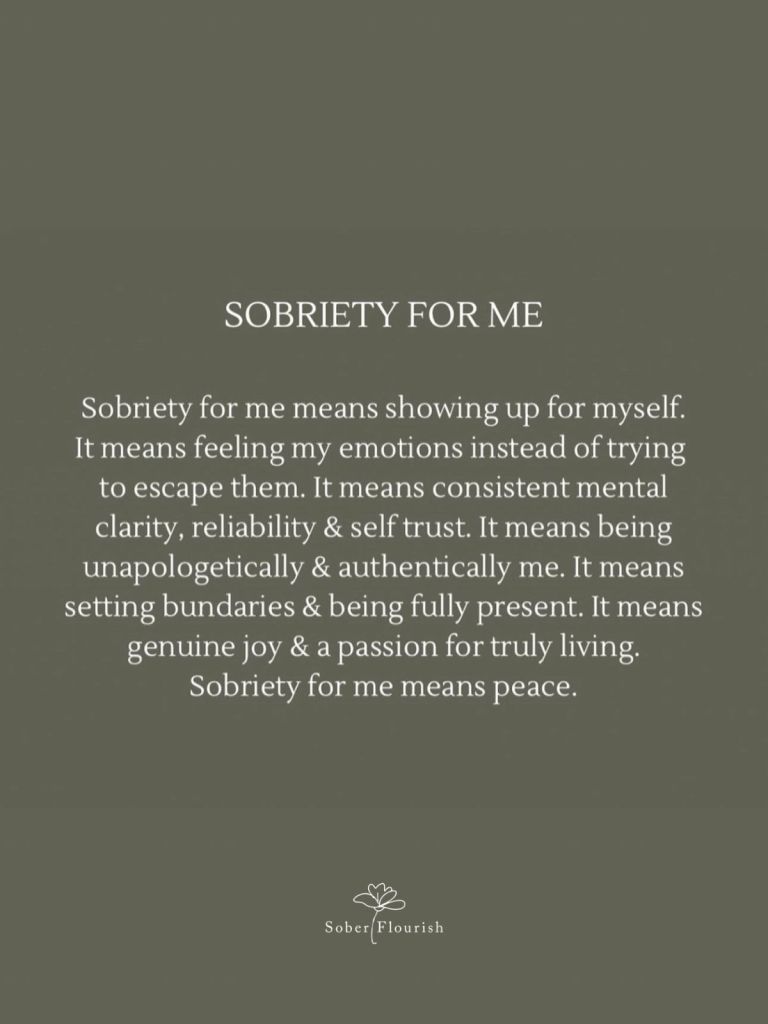
Sober graphic made by D.K. Sanz on Canva

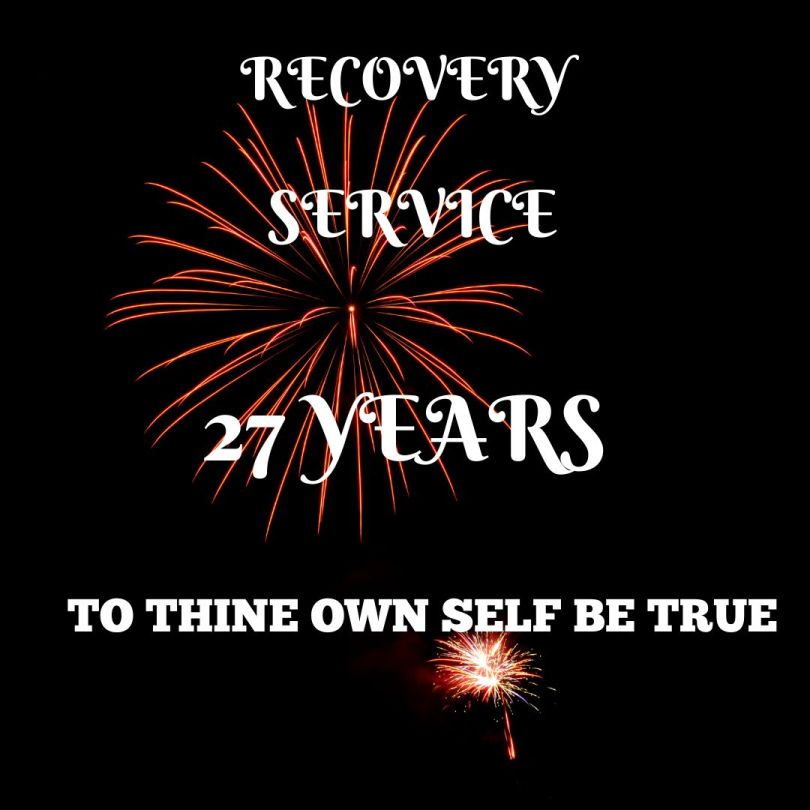
GRATEFUL TO CELEBRATE 27 YEARS OF SOBRIETY

You don’t have to be a lampshade-wearing drunk or fighting barroom drunk for drinking to be a potential problem. However, there was a time when I figured just backing off street drugs was the end of that forbidden road. I continued to drink alcohol—mainly a glass of champagne on birthdays or holidays.

Yes, well—abstaining from one drug and not another may work for some people, but I realized 27 years ago that it wouldn’t work for me. That’s when I decided I might as well stop drinking, too, and adhere to the twelve-step program.

It was only the beginning of my surrender.

In my first decade of sobriety, I didn’t fully understand why people said it’s “one day at a time” to infinity and beyond. If you’re not abusing alcohol or any other substance and haven’t even come close to relapsing in all these years, you’re good, right? You’ve got this. But that’s not how it works. Addiction, I learned, is a disease of the body, mind, and spirit, and emotional sobriety while abstaining is also ongoing one day at a time. 

On the emotional end, it’s been referred to as the “disease of the attitudes.” Still, I have to say most of us who’ve resorted to substance abuse come into recovery with fleas from narcissistic abuse, usually from people who were also living the aftermath of narcissistic abuse. On top of all that, many of us are trauma survivors who’ve dealt with physical, emotional, or sexual abuse—quite often all of those things.

Under these circumstances, we’ve co-opted the shame-based coping and survival skills of our abusers. They are skills that have kept us alive and emotionally intact while also putting us at significant risk over and over again. So, we’ve been wandering around doing things we weren’t aware of to block out the pain or create a pacifying illusion of safety. On some level of our consciousness, our needs seemed urgent, making us unusually vulnerable. We craved attention, validation, and praise, and that was another drug, a temporary fix whenever someone complied. It doesn’t work for long because, as with any other drug, the euphoria fades, and you remember the pain and torture of what you genuinely fear—that you’re not special or that no one loves or cares about you. Hence, we crave one fix after another.

We convince ourselves that certain relationships are about selflessness and love when they are more often tainted by our dysfunction. We may love people the best way we can, but it’s only as genuine as we are.

Whatever the deal is, addiction is an obsession. In its active state, it impairs our judgment and clouds our perception. It robs us of clarity which only returns and continues to improve with consistent physical and emotional sobriety. Meanwhile, the pressing urges of codependency will consistently override any willingness to be authentic. 

Addicts, for the most part, in our lifelong frenzy, attempting to survive the madness, may become con artists. Often, too, we lack empathy. We are self-obsessed and often unable to put ourselves in someone else’s place. We’ve lost the connection where we assimilate what others are experiencing. 

Without realizing it, we may become bullies with an eye out for any perceived threat, frequently compelled to do damage control. We’re fiercely determined to preserve our delusions and denials and protect our “secrets.” We attempt to control everything, including how others perceive us. So, drama is very much a part of our lives—waiting for the other shoe to drop, dreading it when the phone rings, an automatic response of, what now? And we don’t hold ourselves accountable for our actions. Instead of learning from our mistakes, we make excuses.

Despite having developed a shaky trust in others, we still trust the wrong people at times because those types are familiar to us. We form toxic relationships that can put us or keep us in dangerous situations with severe consequences. People inclined to use our fragility against us instinctively take advantage, and we will unintentionally draw them to us. Sometimes, they suffer from the same affliction, and their desperation is so great that they can’t discern beyond it. Neither can we.

The point is, we can abstain and still be a hot mess. When we come to our moment of surrender, we are broken and, yes, quite fragile in our vulnerability. Our self-esteem has been gutted. We feel unworthy of anything good. We lack the tools or coping skills for dealing with life on life’s terms. There continues to be unrelenting self-sabotage and self-loathing.

It’s a long road for us, and guilt continued to assuage me for many, many years. I cringed, embarrassed, remembering things I said or did, and it was hard for me to find any empathy for the person I was. My dearest friend, whom I’ve known for decades, reminded me not to be so hard on myself. “That girl was just trying to survive,” she said.

It’s hard to believe that merely trying to survive can be so catastrophic, but we’re not perfect. We struggle, and if we continue to put in the effort to become the best people we can be, we never stop getting better. The most important thing to me is continual recovery in every regard. As long as we’re still here, we have a chance to fight for our lives. I’ll never stop fighting, and I’m always grateful for another day to awaken and thrive.

This writing is an unedited excerpt from my new memoir, Grateful to Be Alive. For more details about the book, please read on.

Book description: 

Grateful to Be Alive

My Road to Recovery from Addiction

by D.K. Sanz

Do unsettling truths bring harsh judgment? They do, but the price of denial is steep.

D.K. Sanz’s story begins in the drug-infested New York City streets of Woodside, Queens, during the tumultuous HIV/AIDS pandemic of the 80s and 90s. It offers a glimpse into how a now often-overlooked pandemic impacted Sanz’s nuclear family. 

From her earliest days, D.K. was the easily forgotten stranger, always a little out of sync with the rest of the world—a tough but naïve kid and aspiring writer. Her triumph over illness and addiction includes amusing anecdotes and nostalgic, heartwarming memories.

Grateful to be Alive delves deep into Sanz’s confessional self-sabotage, self-destruction, and the harrowing downward spiral she almost didn’t survive. Her never-before-told story ranges from recklessness and impudence to empathy, forgiveness, and love.

D.K. has since published several books, primarily poetry but also a novel, and she continues to work on sequels and an all-new fantasy series. You’ll find some of her poetry at the end of this book.

Whether struggling or not, you will find Grateful to Be Alive is a story of hope, defying insurmountable odds, finding joy, and a gradual transition toward authenticity and becoming the person D.K. always wanted to be.

ARC Copies

For those unfamiliar, an ARC is an advanced reader copy provided before publication. Each recipient of an ARC intends to read and review the book. Reviews can be anywhere from one sentence to three or four paragraphs. Ideally, they should appear on Amazon and Goodreads the day the book comes out, likely in February. (I will notify you of the release date.) If it’s posted after that date, the sooner, the better, of course, but days or months later is still good. In other words, there is no rush.

Once given an ARC, you are under no obligation to read or review the book, but, at the same time, you wouldn’t want to request an ARC copy if that’s not your initial intention. In other words, if reading the book causes you to change your mind for any reason, there are no consequences, legal or otherwise.

ARCs are free. Currently, I have them available in Word or PDF formats. Eventually, they will be available on Kindle.

Reviews by ARC readers are posted on Amazon and, hopefully, Goodreads if the recipient has a Goodreads account.

ARC readers, unlike beta readers, are not expected to provide feedback to the author besides the public review, but feedback is certainly welcome.

To apply for an ARC, please e-mail me at dksanz@yahoo.com and answer the following questions:

1) Are you familiar with the author’s work? (Just curious, it’s okay if you’re not.)

2) Have you ever reviewed a book by this author?

3) Please briefly explain why this particular book would interest you.

4) Have you reviewed books or products before this request?

5) Do you have an Amazon account?

6) Do you have a Goodreads account?

Unfortunately, I may not be able to accommodate every request, but I thank you in advance for your interest.