
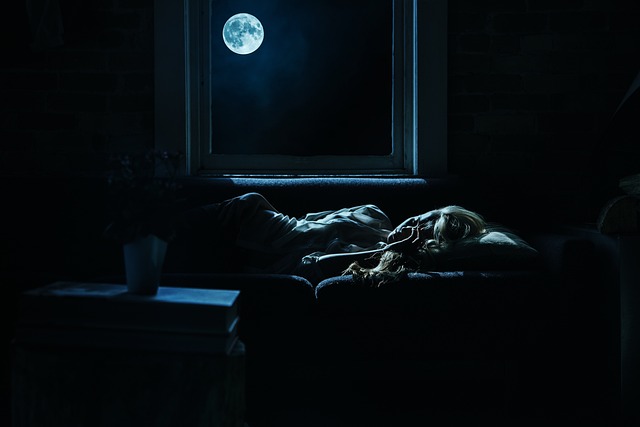
It was a recurring dream for many years.
I’m in the bleak underground, waiting for a train. There’s just enough light from the incandescent lamps to cast a dingy yellow glow. Trains pass, but they look ancient. Still, they are un-defaced by familiar graffiti. Near the passenger doors, the stops each train would make are listed on a flipping board. I don’t recognize any of these places.
Rooted to the platform, I ask strangers for directions. None of them have ever heard of this place I want to go to—never heard of Woodside, Queens. Lost and disoriented, I feel deep distress and despair.
In my mind, I recall Manhattan’s glittering skyscrapers seen at a distance, beyond the river and the bridge. I remember my train rumbling speedily toward the heart of Queens, passing through the tunnel into sunlight. Sometimes, I’d catch the sunsets when my train emerged from the tunnels, and I was in awe of the dark navy sky and its sweeping reign over the houses with their golden-lit windows. Or the trail of light orange and the vibrant, darker orange that faded into a pale gray sky.
The strangers around me finally mention places that sound somewhere near where I want to go—still far, but I have some hope I’ll get closer. I’ll get there eventually. And I’m willing to settle for that.
Oddly, we’re outside now, still on the platform, but it’s more colorful here. I see trees and recognize the stranger beside me, but he’s barely an acquaintance. The train chugs along, but it’s too crowded when it arrives. I can’t get in, but he does. There’s simply no room for me. I don’t fit.
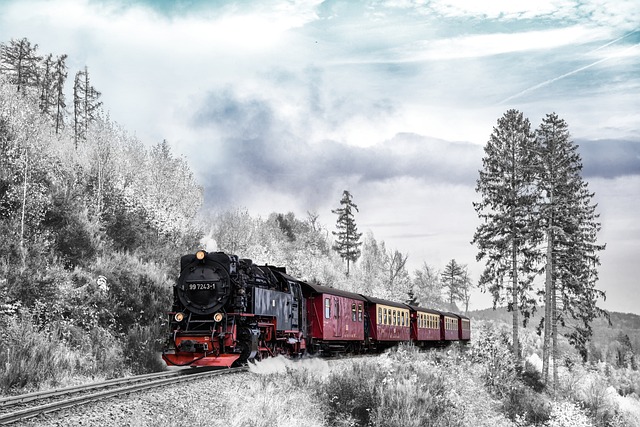
Suddenly, another train barrels toward me, its rapid arrival quite unexpected. I hear the beeps and clangs, and I think, “That’s the one.”
Without hesitation, I scramble on board. I never check where it’s headed. We travel farther and farther away from all that’s familiar. Soon, I am far from the place I call home and everything and everyone I had ever known. We pass an endless green sea with a boat in the distance. We are somewhere remote. I don’t recognize this place.
My dreams are vivid, yes, and colorful, and my recollection of them is thorough.
In another persistent dream I’ve had since my recovery, and until recently, I ride a motorcycle that I’m so proud to be riding. (I’ve only ever ridden on the back of one.) As the dream progresses, the motorcycle becomes a bicycle, which I did ride as a kid, and, in the dream, I’m still thrilled because I’m cruising everywhere, including up and down the dark streets of Woodside, my old stomping ground.
I’m experiencing freedom in this dream, and I’m celebrating it, so I’m happy. Except that the bike gets smaller and smaller until I’m on a tricycle that I’ve obviously outgrown.
There’s also a recurrent nightmare where I have to get home from Roosevelt Avenue—that walk home at night from the park I’d dreaded as a kid, as well as the route home after work from the train station when I lived in Woodside. It’s light at first in the dream but gets darker and darker until it’s completely dark. I’m never a kid in the dream, but, still, the dilemma frustrates me and plays out as an obsession. Whatever way I choose to go, that long, seemingly deserted hill can’t be avoided, which in reality is true unless I take the route from the crowded, brightly lit storefront area on 61st Street. Even then, I’d have to go past the place on Woodside Avenue where it’s eerily quiet at night.
More recently, I dreamt that I was stranded somewhere and ran into my parents. I asked for a ride home, and they refused for some reason that made no sense. At first, I thought, well, it’s beginning to snow now and starting to get dark, but I’ll make it. As I walked, it continued to grow darker. The snowfall became heavier, so I tried running. Creepy people tried to lure me into alleys. Somehow, though, I got past those creatures and arrived home.
My son was asleep in his room. I must’ve gone to sleep, too. In that same dream, I awoke in the dark to find the door locks broken off the door. A sign was on the front door saying, I hate you. I will destroy you. It was written in blood. People with cold, angry eyes and a few angels floated around the room. They did nothing to physically harm me, but they were holding my son captive, so I charged in there like a martial arts movie hero, kicking them all. They had an invisible shield I couldn’t penetrate, so I went to the door, opened it, and began screaming and begging for help. No one answered.

Now, I can easily interpret what that awful nightmare meant, but David said, “You should never go to sleep. Your dreams are horrifying.”
That had me splitting my sides, and he was equally amused.
Transportation is a common theme in these dreams, and I am moving by bike, train, or on foot. I think, symbolically, it has to do with where I’m going—my path or journey, my goal, and whatever happens in getting there. There’s the persistent question of whether I’m heading in the right direction, and, according to a book I’d read a about dreams, train stations represent transformation. I don’t think any of these dreams suggest I am lost, but I am consistently unable to go home, and I don’t fit or belong there.

The destination is always Woodside, although I haven’t lived there in decades and will never have to make that walk again from any street. Woodside, with its good, its bad, its horror, and its beauty, will always be special to me, and I get those bittersweet pangs of nostalgia when anyone so much as mentions my hometown of Queens. However, my fear at the time I lived there was possibly intense enough to carve out a permanent space in my subconscious mind. Or, it merely represents a place of origin because I’ve wondered if, in order to persist with your ultimate goals, you can’t go back.
The “threats” in my dreams are all of the obstacles.
Interestingly, I was about to say I hadn’t had a “train” dream in a while, but one occurred the other night. In this one, all the subway stops had their names changed. Some were crazy names like Anywhere You Want to Go, while others simply said 50th Road or some other ordinary thing. Per the usual, I had no idea where any of those stops would leave me on the way to Woodside. The platform on this station was perilously narrow, so I had to be careful, even sidestepping rocks while navigating what little room I had.
On a lighter note, I once dreamt I was a cookie, and mobs of people chased me, wanting to eat me. Amused, I told David that I’d had that dream.
“Of course, you did,” he replied, and we shared a good laugh.

Excerpt on ‘Dreams’ from Grateful to be Alive – My Road to Recovery from Addiction by D.K. Sanz
Woman sleeping/night moon feature photo by IceRedfield from Pixabay
Train image by annca from Pixabay
Monster in window image by 1tamara2 from Pixabay
Train station image by Igor Ovsyannykov from Pixabay
Gingerbread man image by artistlike from Pixabay

 D.K. Sanz