

Most often, my favorite books are high suspense page turners—thrillers, horror, fantasy. And since I am fascinated by human behavior and shared wisdom, I also read memoirs and accurate historical accounts of important events.
Before I get into the two books I’m referring to in the title of this post, I’ll review a third book I finished reading at about the same time. It’s a good book as well, so I’m happy to give it a mention. I plan to post all reviews on Goodreads and Amazon.

Description:
The True Story of the Prison Escape That Inspired the Documentary “How It Really Happened”
In June 2015, two convicted murderers broke out of the Clinton Correctional Facility in Dannemora, in New York’s North Country—launching the most extensive manhunt in state history and dominating the news cycle with the sex scandal linking both inmates to the prison employee who aided them.
Double murderer Richard Matt and cop-killer David Sweat slipped out of their cells, followed a network of tunnels and pipes under the thirty-foot prison wall, and climbed out of a manhole to freedom. For three weeks, residents of local communities were prisoners in their own homes as law enforcement swept the wilderness near the Canadian border.
Dannemora is a gripping account of the bold breakout and the search that ended with one man dead, one man back in custody—and lingering questions about those who set the deadly drama in motion.
My rating: ****
My Review
I enjoy watching prison drama shows and reading books about it. This historical escape is recounted by a former prison guard and retired correction training lieutenant (Gardner). Funnily enough, it happened in my state, but coverage in southern New York, where I live, was not as extensive as it was up north. The facility we refer to down here as Dannemora is actually the Clinton Correctional Facility in Dannemora, a remote rural area closer to Montreal than to me. So, learning about this legendary place and how New York State runs its prisons fascinated me, but the book doesn’t really become a page-turner for a while.
The book left no doubt that a lot of problems within the prison system need to be resolved. I read reviews where people felt the author was biased in blaming the governor (Andrew Cuomo) and the Department of Corrections administration for the escape of these two dangerous criminals and not the neglectful, incompetent guards. However, as the author explains, these prisons are short-staffed. They are restricted in terms of what they can do, and God forbid anything they have to do requires overtime pay. Gardner does als0 blame any guards who were neglectful.
Anyway, this was a good read. I enjoyed it.
About the Author

Charles A. Gardner is a municipal court judge and retired correction training lieutenant in Malone, New York, the far-upstate town where he was born and raised. His twenty-five-year career in New York State Department of Corrections included working as a correction officer, sergeant, and lieutenant. He had experience working in medium- and maximum-security facilities including stints at Clinton Correctional Facility in Dannemora and the maximum-security prisons of Sing Sing, Bedford Hills, Great Meadow, and Upstate. He lives with his wife in the North Country. Visit him at http://www.charlesagardner.com.

Description:
Winner of the Pulitzer Prize and the National Book Award, this novel about a resilient and courageous woman has become a Broadway show and a cultural phenomenon.
Celie has grown up poor in rural Georgia, despised by the society around her and abused by her own family. She strives to protect her sister, Nettie, from a similar fate, and while Nettie escapes to a new life as a missionary in Africa, Celie is left behind without her best friend and confidante, married off to an older suitor, and sentenced to a life alone with a harsh and brutal husband.
In an attempt to transcend a life that often seems too much to bear, Celie begins writing letters directly to God. The letters, spanning twenty years, record a journey of self-discovery and empowerment guided by the light of a few strong women. She meets Shug Avery, her husband’s mistress and a jazz singer with a zest for life, and her stepson’s wife, Sophia, who challenges her to fight for independence. And though the many letters from Celie’s sister are hidden by her husband, Nettie’s unwavering support will prove to be the most breathtaking of all.
The Color Purple has sold more than five million copies, inspired an Academy Award–nominated film starring Oprah Winfrey and directed by Steven Spielberg, and been adapted into a Tony-nominated Broadway musical. Lauded as a literary masterpiece, this is the groundbreaking novel that placed Walker “in the company of Faulkner” (The Nation), and remains a wrenching—yet intensely uplifting—experience for new generations of readers.
My rating: *****
My Review
For me, this book falls into the category of human behavior, struggles, and experiences that I want to read about. It’s fiction but reflects the times, namely how appallingly white people treated black people, especially women, in the first half of the twentieth century. The dialogue is consistent and seems so authentic, staying true to the well-developed and endlessly endearing characters. I had so much love for Celie, Shug, Nettie, and Sofia—for their kind hearts and earned wisdom. Their courage, grace, and determination to survive and fight back had me cheering them on from beginning to end. I laughed and cried with them.
There are so many great quotes from the book, but one of the many that made me laugh hard was Sofia responding to white men calling her “Aunt.” As Celie explained, Sofia ast one guy “which colored man his mama sister marry?”
The Colored Purple is a gem of a book to be treasured throughout time and so well deserving of the Pulitzer Prize awarded to its author. I highly recommend it.
About the Author
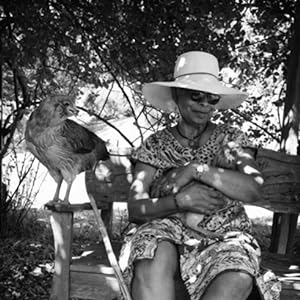
Alice Walker (b. 1944), one of the United States’ preeminent writers, is an award-winning author of novels, stories, essays, and poetry. In 1983, Walker became the first African-American woman to win a Pulitzer Prize for fiction with her novel The Color Purple, which also won the National Book Award. Her other books include The Third Life of Grange Copeland, Meridian, The Temple of My Familiar, and Possessing the Secret of Joy. In her public life, Walker has worked to address problems of injustice, inequality, and poverty as an activist, teacher, and public intellectual.

Description:
Myrlie Louise Beasley met Medgar Evers on her first day of college. They fell in love at first sight, married just one year later, and Myrlie left school to focus on their growing family.
Medgar became the field secretary for the Mississippi branch of the NAACP, charged with beating back the most intractable and violent resistance to black voting rights in the country. Myrlie served as Medgar’s secretary and confidant, working hand in hand with him as they struggled against public accommodations and school segregation, lynching, violence, and sheer despair within their state’s “black belt.” They fought to desegregate the intractable University of Mississippi, organized picket lines and boycotts, despite repeated terroristic threats, including the 1962 firebombing of their home, where they lived with their three young children.
On June 12, 1963, Medgar Evers became the highest profile victim of Klan-related assassination of a black civil rights leader at that time; gunned down in the couple’s driveway in Jackson. In the wake of his tragic death, Myrlie carried on their civil rights legacy; writing a book about Medgar’s fight, trying to win a congressional seat, and becoming a leader of the NAACP in her own right.
In this groundbreaking and thrilling account of two heroes of the civil rights movement, Joy-Ann Reid uses Medgar and Myrlie’s relationship as a lens through which to explore the on-the-ground work that went into winning basic rights for Black Americans, and the repercussions that still resonate today.
My rating: *****
My review:
Overall, Medgar and Myrlie: Medgar Evers and the Love Story That Awakened America is a beautiful tribute to American civil rights activist, Medgar Evers and his wife, Myrlie, who was the epitome of elegance, grace, and devotion while being her own courageous young woman.
Medgar Evers was a World War II veteran in a war we fought over racial superiority, a war against racial tyranny, but at home, in the United States of America, even in the 1960s when our little worlds were about peace and love, we treated black people appallingly. For that reason, America looked quite hypocritical to other countries who were aware of the racial tensions here as well as the mistreatment. World War II veteran Medgar Evers, like other people of color, faced the utmost disrespect, being denied the rights afforded to white people and subjected to unimaginable cruelty while being mocked and humiliated every step of the way.
When President Kennedy offered Medgar’s family the honor of having him buried at Arlington Cemetery with the other veterans and heroes, it alarmed segregationists. Good thing their protest amounted to nothing, and Medgar received the honor he deserved.
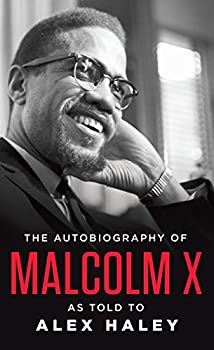
I love that, as discussed in the book, the widows of Martin Luther King, Jr., Malcolm X, and Medgar Evers made friends and supported one another. Coretta Scott King, Betty Shabazz, and Myrlie Evers-William carried on the fight, making tremendous strides of their own as civil rights activists.
Bless Medgar Evers and his family, what they sacrificed to get us where we are today. I never use the world surreal, but when I came upon a photo of Myrlie Evers hugging President Barack Obama fifty years after Medgar’s death, that was surreal to me. She delivered the invocation at his second inauguration ceremony on January 21, 2013.
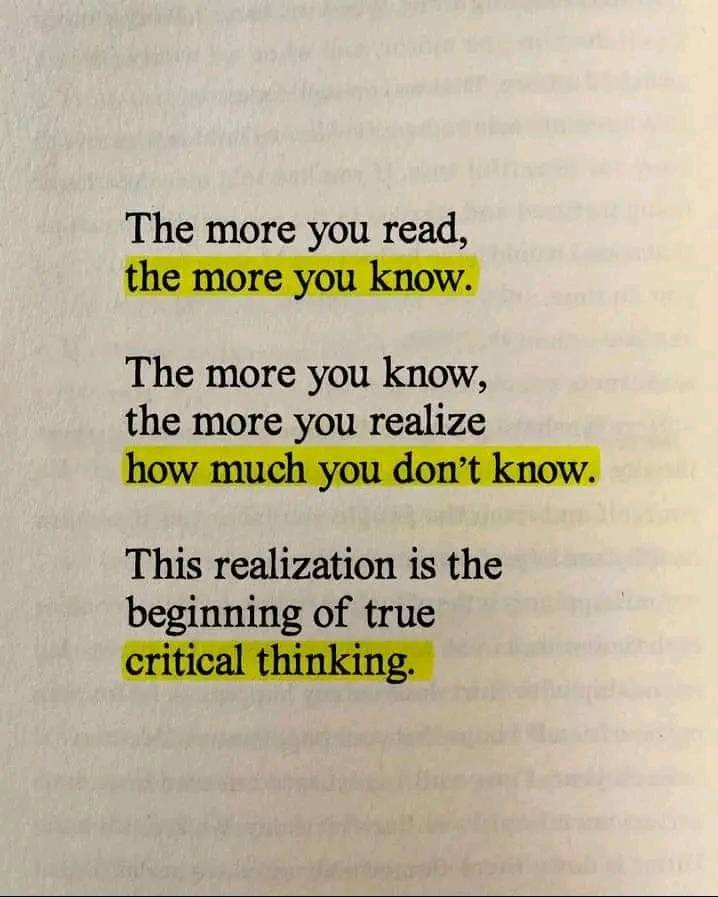
Medgar and Myrlie isn’t the page-turning suspense book I normally read, and it’s certainly not an easy read. It’s a book you read slowly in many intervals, and the more you read, the more you want to know. We should know all of this—our history, the good and the bad. It is critical that we learn from people from all walks of life, whether their experiences are similar to or vastly different from our own.
Medgar and Myrlie is an important book that should be required reading in our schools. I say that because no one taught me about Medgar Evers when I was in school. I, like so many others, grew up oblivious to the sacrifices this young civil rights activist made for the greater good and how much he contributed to the rights ultimately won by his community.
Some people feel that reading stuff like this will traumatize their kids and plague them with guilt. With my awareness as a child, the only effect it had on me was ever-increasing and much-needed empathy. And, yes, all of it is traumatizing—even more so for the people who lived it and constantly witness dismissal of their experience and their pain. As parents, we can help our children sort through whatever they feel about it, and they will emerge as much more kindhearted individuals.
You know, I have to say, Martin Luther King Jr. spoke of saving us from our own demons. He saw the cruel, ugly behavior as demonic. And that’s what demonic means—extremely evil or cruel. And ironically, for so many, the guidebook is the Bible. Both the Old and New Testament have countless passages about loving one another, being kind and generous to the poor, defending the oppressed. For the oppressed to break free. To love mercy, carry each other’s burdens. Yet, one of the biggest problems we have today is people incapable of putting themselves in someone else’s place and being willing to see things from their point of view. It’s easy not to read, not to listen, not to care. The consequences of ignorance affect both the ignorant individuals and the children they raise to be equally oblivious and unkind.
My son and I often talk about why some kids realize at an early age that we need to reject all of this and fight for what’s right, while other kids just go along with what their parents teach them. People are afraid of testing their support system because they have bonded with people who have normalized bigoted behavior, and you sacrifice a lot to stand your ground. But I think about what civil rights leaders sacrificed. Some things are just bigger than us.
So, yes, Martin Luther King Jr. hoped we would rise above our past and present demons.
I read a blog post the other day by someone who thought it was arrogant of Dr. King to think that he could save the soul of America. And yet many people believe that an avaricious, unlawful, misogynistic bigot like Donald Trump can do it. Why? Because he’s white? Unlike Trump, Martin Luther King Jr. didn’t think it was his job alone to heal the country and save our souls, but that it required a collective effort. We are all tasked to help heal the universe, and I hope we succeed.
About the author:

Joy-Ann Reid is the host of “The ReidOut,” which airs weeknights from 7-8:00 P.M. ET. on MSNBC. She previously hosted the weekend program: “A.M. Joy” (2016-2020) and a daily news show “The Reid Report” (2014-2015).
A 1991 Harvard University graduate with a Bachelor of Arts degree in Visual and Environmental Studies with a concentration in documentary film and a 2003 Knight Center for Advanced Journalism fellow, Reid has a longtime interest in politics and elections. During a hiatus from the news business, she worked as a press secretary for the national voter registration and mobilization entity, America Coming Together in 2004 and for the Florida branch of Barack Obama’s presidential campaign in 2008.
Reid has written four books: Fracture: Barack Obama, the Clintons and the Racial Divide, We Are the Change We Seek: The Speeches of Barack Obama (with Washington Post columnist E.J. Dionne), The New York Times best-selling, The Man Who Sold America: Trump and the Unraveling of the American Story and her latest: Medgar and Myrlie: Medgar Evers and the Love Story That Awakened America.
An honorary member of Delta Sigma Theta Sorority, Inc., Reid has received six NAACP Image Award nominations and The ReidOut received the award for best talk program in 2020. The documentary she co-Executive Produced: The Sit-In: Harry Belafonte Hosts the Tonight Show (directed by Yoruba Richen) was nominated for an Emmy Award. And she has received media awards from the Women’s Media Center, the National Action Network, and GLAAD.


Library Heaven cover image at the top by Mystic Art Design from Pixabay



 D.K. Sanz