I don’t know what was going on with my Kindle version of this book. The product details gave the print length as 159 pages. I noticed that at some point, it said I was on page 158, but I was about three-quarters of the way through it. Every page after that also said I was on page 158—up until the last. And the more I read, the more I wanted it to end, so, continually finding myself on the final page began to annoy me.
Of course, if you are human and empathetic, what you read in these pages will hurt. It’s not fiction. Well, it was the Victorian era, so it shouldn’t be all that surprising. Many of us, myself included, romanticize the period, love to hear about it, and live there in fantasy while watching a movie or reading a book, but we don’t always get the reality of how bad things were for women then. People saw them as subhuman. If a man didn’t like his wife’s behavior, he could say she was insane and drop her off in a mad-house. No one seemed to care what happened to most of these “patients” after that, many of whom were quite sane—at least when they arrived.
This book wasn’t what I expected, but I had to ask myself, what did I expect? It sounded as if there would be a lot of drama and chilling suspense, but as a reader, I had to be glad nothing worse happened to Nellie during her undercover investigation of Blackwell Island’s mental illness facility. Not to say it wasn’t bad enough.
Ten Days is not a page-turner riddled with suspense. It’s not an easy read. For the most part, you’re being told, in a somber, wearying way, about the egregious reality of that time.
I found it a little jarring, too, at the end where she began on another mission to assess the predicaments women faced in seeking employment. And, of course, I thought it was over and really wanted it to be over by this point.
It doesn’t seem fair to say these things. The book was well written, and Nellie Bly’s writing style was certainly pleasant enough. She came across as an empathetic narrator, very kind and brave. In writing Ten Days, she did an outstanding service to us all. It was a courageous effort that needed a fearless warrior. She was it.
Further, it was a story that needed telling. Some people today take for granted all that our predecessors fought for and won. We think we don’t need women to stay on top of that, but we do.
I’m glad Nellie Bly wrote this book, and I’m happy I read it. So, kudos to Nellie Bly and a posthumous thank you for a job well done.
Some people have been searching for new books to read during the pandemic. I, myself, have taken the opportunity to download many books offered for free or discounted. (I LOVE to read and often purchase books at full price as well.) Now, I am getting in on the giveaways.
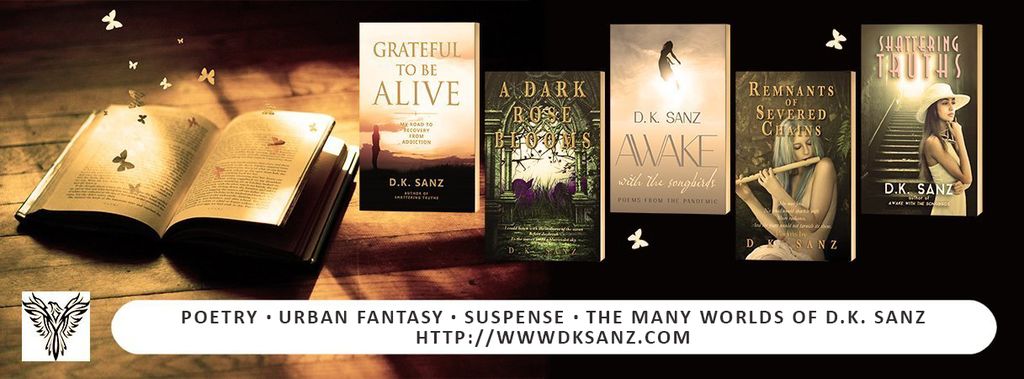
Effective May 18, 2020, and up until May 22, 2020, the Kindle versions of all three of my books will be available to download on Amazon for free. You can go right to those links (I posted them all) or read the descriptions and excerpts before you do.
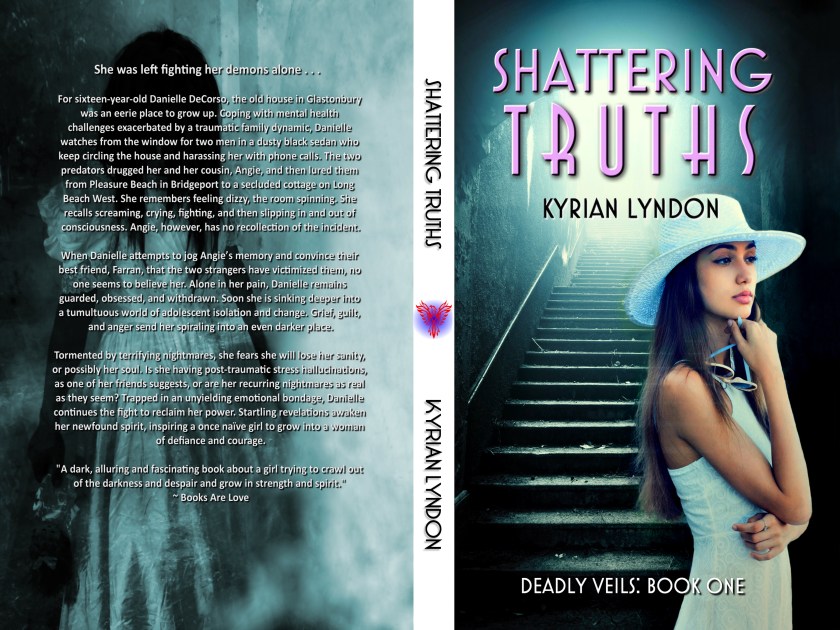
Some truths can be deadly. Danielle isn’t mopey or filled with teenage angst. Danielle and her cousin were abducted, drugged,and raped. But her cousin doesn’t remember, and her best friend won’t believe her. Now, her predators have returned, stalking her, harassing her at every turn. Nightmares plague her sleep, pushing her to the brink of exhaustion.Isolated, terrified, and grief-stricken, Danielle is paralyzed, unable to face the unmerciful world around her. Can she awaken her spirit and blossom into a woman of defiance and courage before the darkness eclipses her sanity?
Shattering Truths, the first volume in the Deadly Veils series, is a haunting and heartbreaking coming of age story. In the tradition of Judy Blume, and following in the footsteps of Thirteen Reasons Why, author Kyrian Lyndon doesn’t shy away from exploring the darker side of life that every teenage girl fears. Filled with suspense, a heart wrenching emotional journey, and twists that will leave you breathless, Shattering Truths will take hold of you on page one and never let go.
** Trigger warning for Shattering Truths: It’s not for the faint of heart.**
Remnants of Severed Chains is a collection of over forty new poems by Kyrian Lyndon, author of A Dark Rose Blooms. This book continues with the same intensity as A Dark Rose, running the gamut of complex emotions that resonate with many. The author explains in the book’s preface that Remnants is about the process of healing and recovery, the willingness to learn and evolve. Thus, she embraces life’s astounding and most personal revelations—afflictions, addictions and relationships, the good and the bad, capturing life’s most devastating moments along with its celebratory moments of beauty and joy.
Sample poem
She stood alone on the edge,
In darkness,
A faint silhouette
Gazing at the night sky.
Rain fell,
A sprinkler to the trees
Thrashing in the wind.
She would flee,
Abandoning places,
Suddenly unrecognizable faces.
The glowing sun of Helios
Was a beacon
For eternal bliss,
Yet deceiving.
The caves beckoned.
Every corner,
Every crevice,
Held its own mystery,
Its truth.

Still the perilous journey
Was madness—
Pretty colors and then
Darkness.
It seemed to have no end.
She heard a child crying,
A child from long ago,
A prisoner of her soul.
Stone walls around her,
Hissing sounds,
Deep, treacherous waters—
Her mind was a fractured maze.
No one could see.
No one could hear.
No safe place to run,
She had to find the way
Out…
Home…
Every stone that healed
Brought her closer to
The truth,
The light.
The climb was steep,
But she held on,
Clawing her way
In blindness,
Accepting,
Facing,
Grieving.

Raindrops glistened on the rocks.
Flower petals littered
The wet grass.
She saw vibrant orchids
In the fading light of the moon,
And, alas,
Tranquil waters glistened
Aqua blue.
Like the ancient alchemical goddess,
She was crowned—
A newborn only beginning
To awaken,
Beginning to see,
Her soul bursting
With bliss.
The beauty within
Became the beauty
Eyes could see,
Not perfection—
Courage, perhaps…
Determination,
Defiance,
And love.
She was free.
No jewel would sparkle with
More radiance,
And the years would not tarnish its shine.
This collection of thirty poems by novelist Kyrian Lyndon spans decades throughout the author’s personal journey. From the soothingly peaceful to the bizarre, Kyrian runs the gamut of complex emotions that will resonate for many. The poems are poignant—honest, open, and straight from the heart, heartbreaking and with humor, embracing light and dark, hope and despair, triumph over adversity.
Sample poem
Oh, for the beauty of the melody, The harmony sprinkled about. He is but a glowing midge Longing to play an Aeolian harp, While holding you still and entranced With the celestial beauty of a god. Ah, but for the pain! The seraphic master sets about casting shadows So that I cannot see the sun, Leaving but a vista of tomorrow’s joys and treasures. The current focus becomes a precursor Along the predestined path, A traverse on the bridge. That’s my all-too-rigid honeybee, Leaving me with a concave and sunken universe, A hollow path in my heart and my soul.
If you download any of the books (or all of them), please consider letting me know what you think! I’ve developed some pretty thick skin. But then, again, I have not heard anything too harsh thus far. 🙂
The sun rises with
Foreboding crow caws,
While the day brings
Sirens of uncertainty.

Allergies persist.
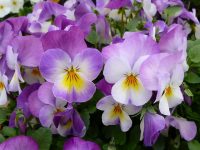
Well, for the lilac pansies,
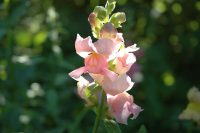
The snapdragons,
And the daffodils…
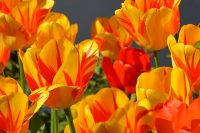
Oh, and the tulips in all colors,
Beautiful and bold.


We see the sun
From behind the glass.
We hear the rain.
Upstairs, there is music.
He’s singing—
Playing guitar.

Below we talk like survivors
Of dystopian madness
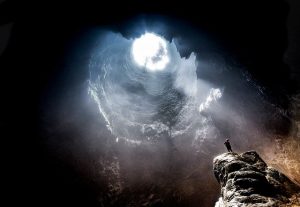
Taking shelter in a cave.
“Are you okay?”
“Yes.”
“Are you sure?”
“Yes. Are you?”
“Yes.”


The days are longer.
Open windows let in the breeze.
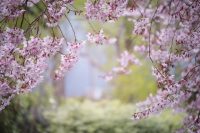
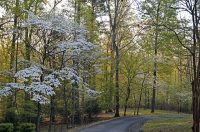
Outside, the trees are tall and proud.
With all their flowers,
Cherries,
And leaves.
Yet we—
We are powerless,
Our illusion of safety
Violated once more.

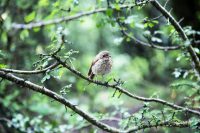
Oh, but the birds chirp in a frenzy!
Come play.
The earth is alive!
We need to laugh and
To cry.
Everything is tragic
 And beautiful.


But some have no one to talk to,
Little, if anything, to eat,
No way to get well,
And nowhere to hide.
Others rise to an occasion
They never could have fathomed,
Working toward their lifelong dream
With infinite empathy.
Does it wreak desolation?

We don’t even know the extent
Of how harsh life can be.
People die for greed.

Dreaded knock on the door now.
No one should come here—
Maybe not for a while.
Uneasy eyes
Behind masked faces.
Down the stairwells then,
One flight at a time,
I go beyond the door,
Where the world is.
Experience it once more,
For a short time.
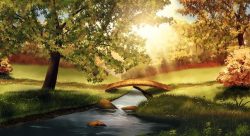
The sun is bright
Across a vivid blue sky.
There’s the scent of fresh-cut grass
And the sweet caress of the wind.
It’s like a summer day
With pillowy clouds
And butterflies.
The world’s magnificent beauty.


 Then it’s back to the safe place.
Do you have one of those?
A safe place to be?
I hope you do.

Because the stars are still there at night,
Like the glorious moon.
I watch them as I hope
Things get better.
Like they always did before,
At least, for a little while.
“How Are You Feeling These Days” poem by Kyrian Lyndon
Sally Field is one of those people who notices her patterns and vulnerabilities and, as a result, digs deep for answers. Because of that, she continually evolved as an actress, as a woman, and as a human trying to survive all the madness. That type of constant transitioning brings wisdom and strength, but it also leads to unlimited capacity for empathy.
Sybil was the first movie of hers that I watched after having read the book. While reading In Pieces, I had to go back and watch Sybil again. The woman is brilliant, and I can tell you, after reading her memoir, she’s badass as well.
I never realized how many movies she’d been in—at least 38! It was fun to read about the filming of many of those because she shined in every single one that I saw—Norma Rae, Steel Magnolias, Mrs. Doubtfire, Forrest Gump. She even played Aunt Betsey Trotwood in David Copperfield—a made-for-TV movie adapted from one of my favorite novels.
If you are a fan of Sally’s movies, you will fall in love with Sally while reading In Pieces—the same way you fell in love with Sybil and Norma Rae when Sally became those characters on the screen.
Ms. Field wrote In Pieces herself and did a beautiful job of it.
At times, there were some unflattering things about others that I didn’t think were necessary. I wasn’t sure I’d be patient if that continued throughout the book. It didn’t. The more you read her words, the more you realize how fair she tries to be to everyone involved. Her kindness, her understanding, outweighs the need to point fingers and punish the people who inadvertently harmed her. It’s her raw honesty and accountability combined that leaves me in awe. She never tries to make herself look good or perfect or as if she is forever the victim but never the culprit. The rest is her truth, which she has every right to divulge. The “Me Too” revelations are merely a part of her incredible story because she triumphed over all of it.
In short, I liked this book from the beginning, and, by the end, I loved it.
Nobody would see the pain behind that beautiful Gidget smile of hers, but Sally Field has been so incredibly brave from childhood to this very day, and she has continued to grow more beautiful with time.
As someone in quarantine who thrives on isolation, I had to reflect on that recently, and I was inspired to divulge what I concluded, partly to see if anyone could relate.
For the longest time in my life, I believed writing was my destiny or my calling, and that there was never any choice about it. It made sense because I started doing it when I was eight years old and kept on no matter who or what happened in life. It was automatic and the equivalent of breathing (almost ). Romantic relationships were usually complicated since I gave so much to writing and didn’t want to make that same type of investment in potential partners.
My marriage was different because I had a child to raise, and my maternal instinct took over, allowing me to devote myself to my husband and my son. That became a permanent bond. With others, it was most likely I’d eventually back away. Real friends were the only exception to that, and even with my nearest and dearest, I can shut down in the moments I need to and remain in my little bubble until one or the other calls upon me. (This COVID lockdown has me in shutdown mode more than usual.)
So, what I realized is, there is a high probability that I started writing for one simple reason. It allowed me to escape to a world far removed from reality. And that was where I wanted to be. It was never that I didn’t care—more like I cared too much, and I knew it, and it hurt.
As a child, like so many children, I was blown away by The Wizard of Oz. I grew to love role-playing and parallel universe fiction. When role-playing games became on online obsession, combining these two elements, I was among the obsessed. What more could I ask for than the opportunity to vanish into a fake world of my own choosing and explore it fearlessly without ever having to face any consequences?
It’s a weird thing to explain because, from the moment I could fully experience it, the real world has thoroughly fascinated me. I immensely enjoy being out there whenever I am. But, yes, in the general sense, I prefer fantasy to reality. I always have, and I know I’m not alone in that. It’s not a sad thing, not to me. You can be happy and sad, laughing or crying, talking up a storm or perfectly still, and it’s all good. I love and embrace it all, but when I can’t deal at that particular moment, I don’t. I thought it was the poet in me who felt that way, but maybe it’s just me.
I’m not sure if any of it is normal, but becoming aware of it did make me feel selfish. At the very least, it made me realize I have been selfish at times. (Ironically, I had to get in touch with reality enough to understand how deeply flawed I am, and to begin working on it.) That work began years ago and continues to this day.
Still, I had to ask myself this question. If what I had wanted all along was to escape reality, why did I base some of my work on things I’d witnessed or experienced?
Well, for one thing, I compartmentalized my feelings and traumas. The people on the page were not real because I’d turned reality into fiction. I was playing God, and, most importantly, I was in control. I needed to be in control. (The focus of my work, by the way, has now shifted to 90% fiction.)
The good news here is, everything is all about learning and growing. It never stops, and because of that, I’ve become increasingly grateful and so incredibly appreciative of the people in my life.
It’s much easier to be “present in the moment” when you know to cherish it! I find that these days, I genuinely care without needing anything in return. So, I’m not all bad.
I suppose the need for self-protection will override progress when necessary, mostly out of habit, but in this life, if you’re committed to improvement, you will achieve it!







 The sun rises with
Foreboding crow caws,
While the day brings
Sirens of uncertainty.
Allergies persist.
Well, for the lilac pansies,
The snapdragons,
And the daffodils…
Oh, and the tulips in all colors,
Beautiful and bold.
The sun rises with
Foreboding crow caws,
While the day brings
Sirens of uncertainty.
Allergies persist.
Well, for the lilac pansies,
The snapdragons,
And the daffodils…
Oh, and the tulips in all colors,
Beautiful and bold.
 We see the sun
From behind the glass.
We hear the rain.
Upstairs, there is music.
He’s singing—
Playing guitar.
Below we talk like survivors
Of dystopian madness
Taking shelter in a cave.
“Are you okay?”
“Yes.”
“Are you sure?”
“Yes. Are you?”
“Yes.”
We see the sun
From behind the glass.
We hear the rain.
Upstairs, there is music.
He’s singing—
Playing guitar.
Below we talk like survivors
Of dystopian madness
Taking shelter in a cave.
“Are you okay?”
“Yes.”
“Are you sure?”
“Yes. Are you?”
“Yes.”
 The days are longer.
Open windows let in the breeze.
Outside, the trees are tall and proud.
With all their flowers,
Cherries,
And leaves.
Yet we—
We are powerless,
Our illusion of safety
Violated once more.
Oh, but the birds chirp in a frenzy!
Come play.
The earth is alive!
We need to laugh and
To cry.
Everything is tragic
And beautiful.
The days are longer.
Open windows let in the breeze.
Outside, the trees are tall and proud.
With all their flowers,
Cherries,
And leaves.
Yet we—
We are powerless,
Our illusion of safety
Violated once more.
Oh, but the birds chirp in a frenzy!
Come play.
The earth is alive!
We need to laugh and
To cry.
Everything is tragic
And beautiful.
 But some have no one to talk to,
Little, if anything, to eat,
No way to get well,
And nowhere to hide.
Others rise to an occasion
They never could have fathomed,
Working toward their lifelong dream
With infinite empathy.
Does it wreak desolation?
We don’t even know the extent
Of how harsh life can be.
People die for greed.
Dreaded knock on the door now.
No one should come here—
Maybe not for a while.
Uneasy eyes
Behind masked faces.
Down the stairwells then,
One flight at a time,
I go beyond the door,
Where the world is.
Experience it once more,
For a short time.
The sun is bright
Across a vivid blue sky.
There’s the scent of fresh-cut grass
And the sweet caress of the wind.
It’s like a summer day
With pillowy clouds
And butterflies.
The world’s magnificent beauty.
But some have no one to talk to,
Little, if anything, to eat,
No way to get well,
And nowhere to hide.
Others rise to an occasion
They never could have fathomed,
Working toward their lifelong dream
With infinite empathy.
Does it wreak desolation?
We don’t even know the extent
Of how harsh life can be.
People die for greed.
Dreaded knock on the door now.
No one should come here—
Maybe not for a while.
Uneasy eyes
Behind masked faces.
Down the stairwells then,
One flight at a time,
I go beyond the door,
Where the world is.
Experience it once more,
For a short time.
The sun is bright
Across a vivid blue sky.
There’s the scent of fresh-cut grass
And the sweet caress of the wind.
It’s like a summer day
With pillowy clouds
And butterflies.
The world’s magnificent beauty.
 Then it’s back to the safe place.
Do you have one of those?
A safe place to be?
I hope you do.
Because the stars are still there at night,
Like the glorious moon.
I watch them as I hope
Things get better.
Like they always did before,
At least, for a little while.
Then it’s back to the safe place.
Do you have one of those?
A safe place to be?
I hope you do.
Because the stars are still there at night,
Like the glorious moon.
I watch them as I hope
Things get better.
Like they always did before,
At least, for a little while.


 ). Romantic relationships were usually complicated since I gave so much to writing and didn’t want to make that same type of investment in potential partners.
 That work began years ago and continues to this day.


 D.K. Sanz